Avoid your inquiry is delay response, please enter your WhatsApp/Skype along with the message, so we can contact you at the very first time.
We will reply you within 24 hours. If for urgent case, please add WhatsApp/WeChat: +86 16652801818,. Or call +86 16652801818 directly.
*We respect your confidentiality and all information are protected. We will only use your information to respond to your inquiry and will never send unsolicited emails or promotional messages.
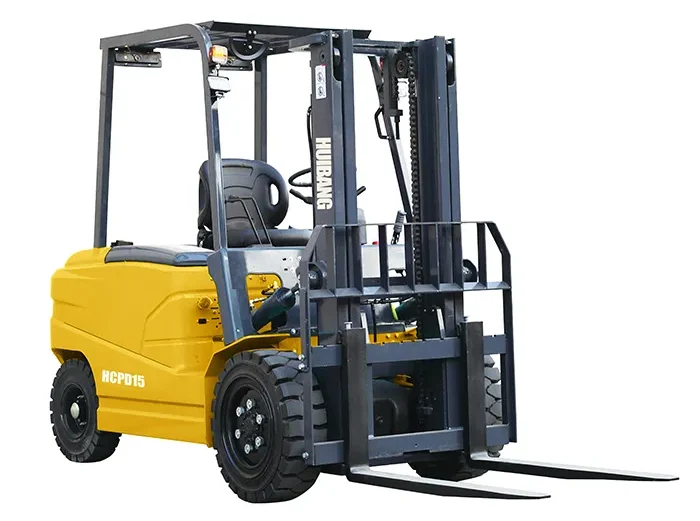
Old diesel units are loud, costly, and tiring to run. They burn fuel, need more service, and make indoor work harder. A HCPD15 electric forklift solves that problem with cleaner power, easier control, and lower daily operating hassle for busy teams.
A 1.5 ton electric forklift is a battery-powered forklift built to move up to 1500kg loads with quiet, smooth, and energy-saving performance. For buyers comparing the hcpd15 electric forklift class, the best choice is usually a compact, easy-to-drive counterbalance model with a strong battery, stable mast, low running cost, and support from a reliable china manufacturer.
The hcpd15 electric class is the part of the market aimed at users who need a practical forklift truck for daily loading, stacking, and short-distance transport without the noise and extra service needs of diesel units. On Huibang’s site, its electric forklift content describes battery-electric models in the 1.5 ton to 3 ton range, while its core electric counterbalance range is positioned around 1.5–2.5-ton work for yards and indoor operations.
From my perspective as a construction equipment writer, this makes the hcpd15 1.5ton segment especially useful for five buyer groups: Construction Contractors, Farmers & Agri Dealers, Landscaping & Forestry Companies, Machinery Rental Companies, and Government/Public Tenders. These buyers care less about flashy claims and more about durability, uptime, clear controls, and whether the machine can keep moving full load cycles all day. Huibang says those same user groups value durability, ease of use, load capacity, and power system strength across its equipment family.
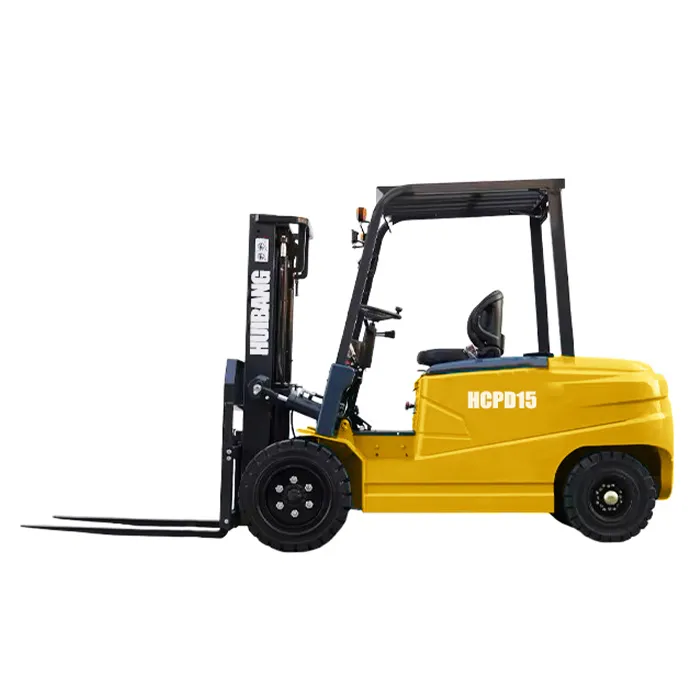
The simple answer is cost, comfort, and cleaner work. A modern electric forklift removes fuel fumes, cuts noise, and reduces many engine-related service items. Huibang’s own electric forklift article says buyers are moving to battery-electric machines because of lower operating cost per shift, easier operator control, less maintenance, and strong torque for lifting loads.
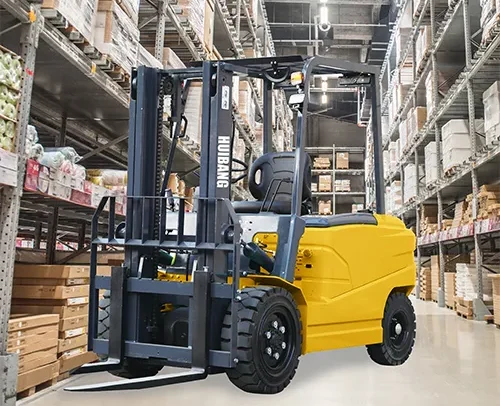
That matters in real life. In a busy warehouse, paved yard, farm supply depot, or municipal store area, you need a lift that starts fast, turns neatly, and does not wear out the operator. Electric drive also supports a more sustainable work model because it reduces local emission output during daily use. For public-sector buyers and rental fleets, that cleaner profile is often a strong bid advantage.
The forklift battery is the heart of the machine. If it is weak, charging takes too long, or the charging plan does not match your shift pattern, daily uptime suffers. Huibang states that many battery forklifts now use 48V or 60V systems and highlights lithium battery options for longer runtime and opportunity charging in multi-shift work.
OSHA also warns that battery care matters. It advises users not to overcharge or undercharge batteries and to regularly check cables and connectors, removing the truck from service if connectors or insulation are damaged. That is one reason I often tell buyers not to focus only on purchase cost. Good charging discipline protects efficiency, battery life, and safety.
For many buyers, the choice is simple:
That approach lowers surprises and can reduce maintenance costs over time.
A counterbalance forklift is often the best fit when you need simple loading and unloading, open front access to pallets, and flexible use across indoor and yard tasks. Huibang’s content places electric counterbalance units in the 1.5–2.5 ton range for indoor and outdoor work on smooth yards, which lines up well with small factories, dealer yards, feed stores, tool rental depots, and project support areas.
The key advantage is ease of use. The fork reaches the load directly, and the rear counterweight keeps the truck balanced without outriggers. That gives users a familiar layout, a stable mast, and better adaptability when jobs change. If your site is mostly concrete, paving, or hard-packed surfaces, this layout usually makes more sense than a specialized off-road unit.
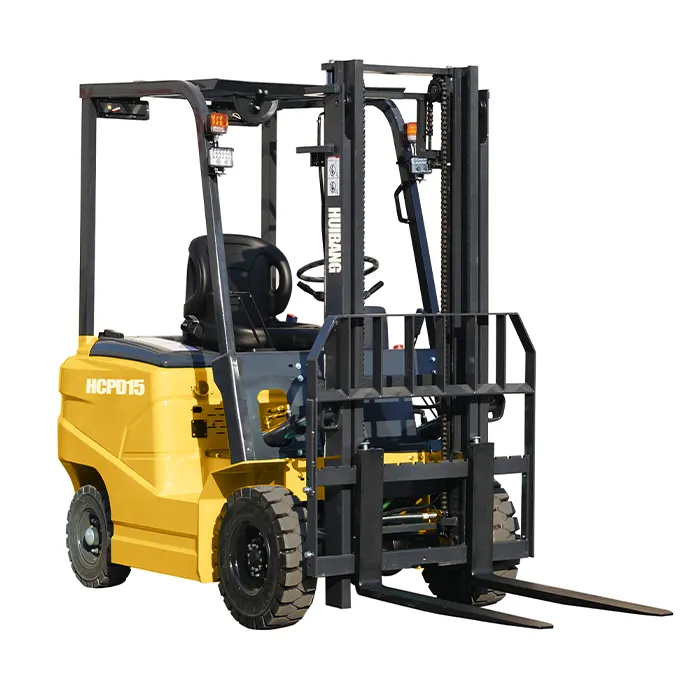
A good truck is not only about weight on the forks. It is also about the driving experience. Huibang says small electric forklifts should focus on ergonomic entry, a slim steering column, and a mast profile that improves sightlines to the forks. That translates into less fatigue and more confidence for the driver.
This is a bigger deal than many buyers think. An ergonomic seat, logical pedal layout, and comfortable driving experience help an operator stay accurate near shelves, trailers, and stacked materials. Better operator comfort usually means fewer small impacts, better cycle consistency, and less wasted time. In a rental or tender setting, those details also make training easier for different users.
A serious china manufacturer can offer a better long-term package than a thin-margin marketplace trader, especially when your business needs repeat orders, parts support, or tender documentation. Huibang presents itself as a direct factory supplier with OEM/ODM capability, intelligent manufacturing lines, laser cutting, welding robots, strong R&D, and product exports to more than 100 countries.
That does not automatically mean every seller is equal. It means you should ask the right questions. I prefer factories that can explain their management system, share testing logic, support custom configurations, and discuss long-term service rather than only offering a low price. Huibang also emphasizes technical support and direct inquiry response within 24 hours, which is valuable for serious buyers comparing sources.
If your team asks whether it is a top brand decision or a value decision, my answer is this: the best value often comes from a capable manufacturer with clear engineering support, not from a famous badge alone. Some buyers compare these units with heli-class options, but final selection should come down to service response, component quality, and fitness for your actual duty cycle.
Durability starts before the truck ever reaches your yard. Huibang says it follows a “quality first” approach, uses intelligent production equipment, and invests in process optimization and intelligent manufacturing. It also highlights its role as a professional high-performance machinery producer, which matters if you want confidence in structural consistency.
From a procurement view, I like to see four things:
Controlled welding and fabrication
Repeatable assembly process
Final testing before delivery
Clear documentation for parts and service
That kind of process discipline supports durable performance and real-world stability. If a seller mentions ISO9001 certification, ask for the current certificate and scope. A good quality management system should be easy to verify, not hidden in sales talk. For public tenders, this step is especially important.
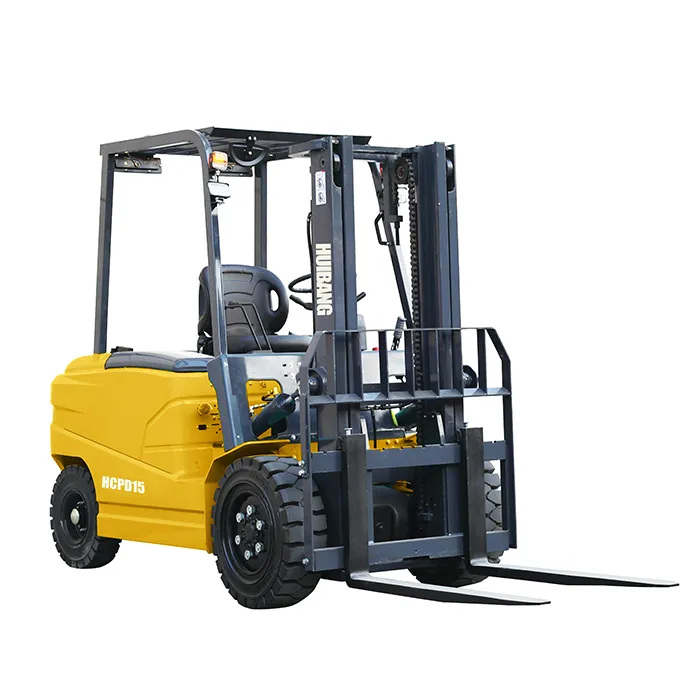
Yes, in many light-to-medium handling jobs it is a very sensible fit. For contractors, it works well in support yards, material staging zones, and paved project compounds. For farms and agri dealers, it suits feed bags, parts, pallets, and general depot handling. For landscaping and forestry businesses, it is useful for workshops, packaged materials, and equipment support around hard surfaces. For machinery rental companies, it offers broad user appeal with easier operation. For government and public tenders, the low-noise, low-emission profile can strengthen compliance and site acceptance. Huibang directly names those same buyer groups in its forklift article.
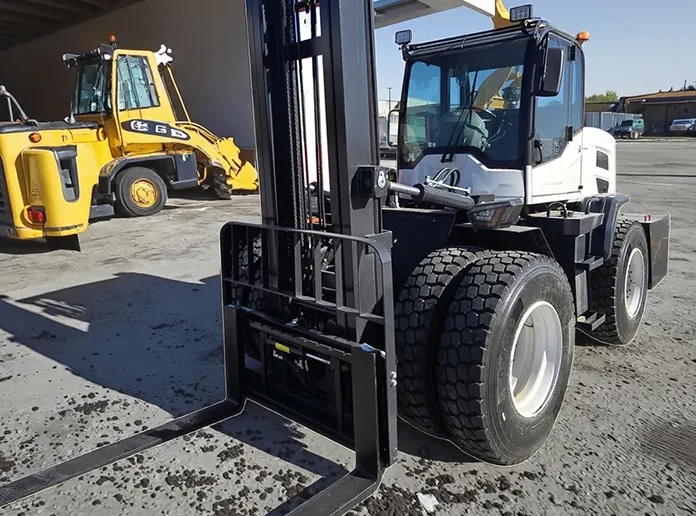
That said, buyers should stay realistic. A 1.5t electric unit is best for smoother ground and controlled conditions. If your site is muddy, heavily rutted, or truly off-road, a rough terrain forklift or another heavier class machine may be the better choice. Huibang makes that distinction too, noting that electric forklifts are ideal for many environments except deep mud or harsh open construction.
Yes. This type of electric forklift is best for indoor work and paved outdoor yards. Huibang positions its core electric counterbalance range for indoor and outdoor use on smooth surfaces, not deep mud.
Huibang says a lithium electric forklift can typically run about 6–10 hours per charge, with opportunity charging extending runtime. Actual hours depend on battery type, shift length, load weight, and travel distance.
For many small factories, dealer yards, farm supply sites, and stockrooms, yes. A 1500kg class forklift covers many common pallet, parts, and packaged material tasks, but you should always size the truck to your heaviest real load at your highest required lift point.
Usually yes. Huibang states that electric models have fewer service needs than diesel, and OSHA guidance reinforces that good battery care and connector checks are key to preserving safe, efficient service life.
Ask about battery type, lift height, mast options, tire setup, service parts, warranty, charging time, and factory testing. Also ask whether the seller is a direct supplier or only a reseller. Huibang highlights factory-direct support, OEM/ODM capability, and technical response for buyers who need ongoing service.
Not always. A factory price only helps if the truck is dependable. The better question is total value: build quality, battery support, parts access, daily uptime, and ease of operation. That is what protects your cost over the full life of the machine.
If I were advising a buyer today, I would treat the HCPD15 1.5 ton electric forklift as a smart, flexible choice for users who want cleaner operation, lower service burden, and strong daily handling for general site support. Huibang’s published content supports that direction by emphasizing electric forklift use across contractors, farms, warehouses, rental fleets, and public buyers, backed by in-house manufacturing strength and broad equipment experience.
The biggest lesson is simple: buy for the job, not just the label. Choose the truck that gives you enough lift, enough runtime, strong sightlines, easy controls, and dependable support from a real machinery manufacturing co that understands field use. That is how you get high efficiency, safe handling, and long-term value.

 English
  Arabic
  Turkish
  Spanish
  Portuguese
  Russian