Avoid your inquiry is delay response, please enter your WhatsApp/Skype along with the message, so we can contact you at the very first time.
We will reply you within 24 hours. If for urgent case, please add WhatsApp/WeChat: +86 16652801818,. Or call +86 16652801818 directly.
*We respect your confidentiality and all information are protected. We will only use your information to respond to your inquiry and will never send unsolicited emails or promotional messages.
I see contractors lose hours to tight yards and soft ground. Crews push, spin, and stall. Jobs slip. Money burns.
A compact wheel loader is a small, agile loader that carries, lifts, and loads fast on firm ground. Brands like Caterpillar and John Deere lead the class with smart cab design, strong hydraulics, and dealer support for parts and service.
I build machines and also run crews on real sites. In this guide, I explain how a compact wheel loader fits your work, where it beats skid steer loaders, what to spec, and how to lower total cost of ownership.
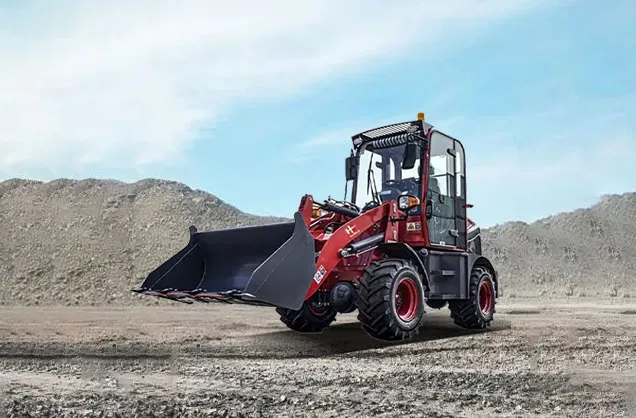
I use the term compact wheel loader for loaders in the 4–7 ton range with an articulated frame. You get a front bucket, fast travel speed, and a tight turning radius. Wheel loaders come in many sizes, yet this class hits a sweet spot for city streets and small yards. These compact machines can work all day with low fuel consumption and quick cycle times on hard surfaces.
Compact wheel loaders are designed to move more per pass than many skid types while keeping better road speed between piles. On a busy construction site, that speed grows output. And because the frame is longer than a skid steer, the ride is calm. Operators stay fresh, which protects productivity and cuts mistakes.
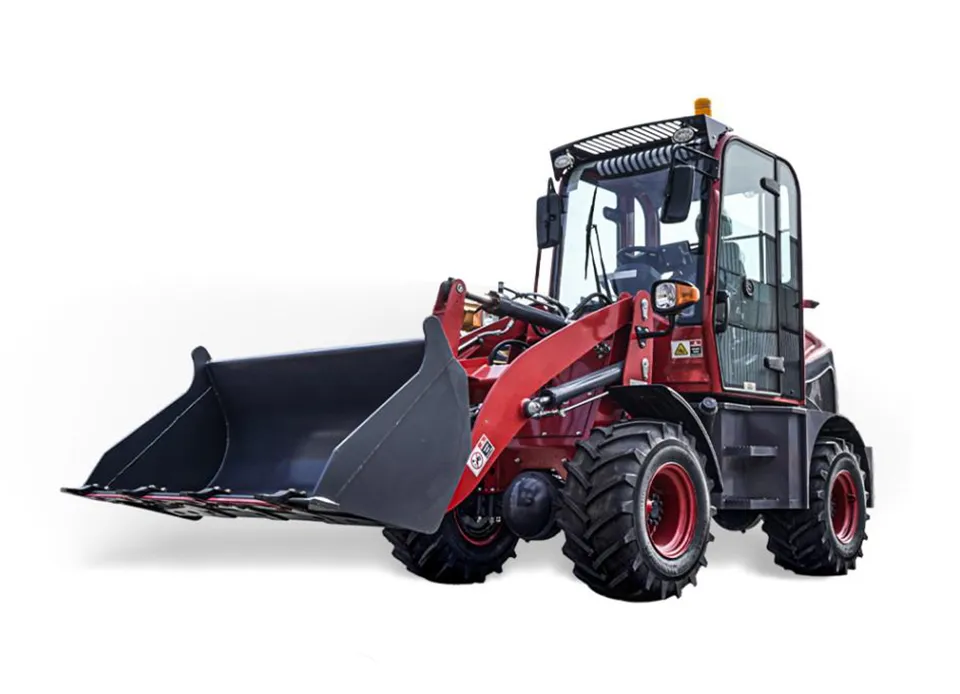
I send our compact wheel loaders to places where space is short and cycles matter: construction yards, batch plants, farms, landscape depots, municipal depots, and rental fleets. On firm ground they beat many machines for speed and comfort.
Typical daily tasks
Why it fits
Buyers often ask what really moves the needle. I care about torque, a smooth hydrostatic drive, and crisp hydraulic response. Strong hydraulics keep cycle times short, and the right tire keeps traction on wet asphalt.
| Spec lever | Why it matters | What I check |
|---|---|---|
| Engine & torque | Pushes into piles and climbs ramps | Power curve, cooling |
| Hydrostatic drive | Smooth inching in tight yards | Low-speed control |
| Hydraulic flow | Fast tip/dump and tool power | Flow & pressure |
| Tires | Grip on hardpan | Pattern & load rating |
| Brakes | Confident stops with load | Wear and response |
Loader models change year to year. I read the data plate, then demo on my worst material pile. If the boom and bucket stay steady at full reach, I know the geometry is right.
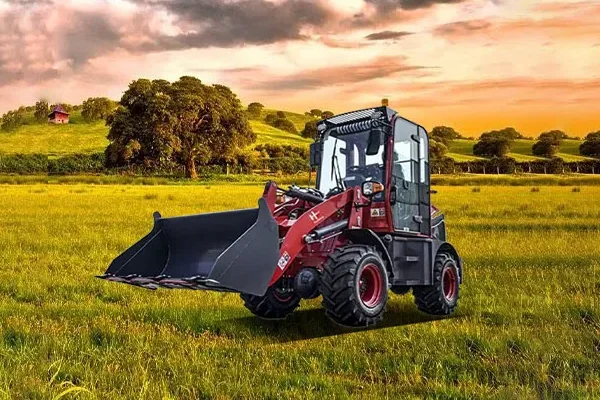
A calm operator makes fewer mistakes and moves more in a shift. Our cab keeps noise low and controls simple.
Small details matter. A clean wiper arc where you look. Mirrors that hold their angle. A door that seals so dust stays out. These touches keep the crew happy and productive.
I build for real jobs. I watch how crews load trucks, clean sites, and stage pallets. I know what breaks and why. Our design team focuses on four things that your teams care about every day: durability, ease of use, load capacity, and power system strength.
“If a machine is hard to drive or easy to break, it will cost you money.” I learned that early. We build so your crew feels calm, not tense.
Is a compact wheel loader strong enough for daily truck loading?
Yes—on firm ground it shines. The longer wheelbase and strong hydraulics keep the bucket steady at reach. You make more clean passes with less spillage.
Skid steer or compact wheel loader for my yard?
If your work is mostly outdoors on pavement, the compact wheel loader will move more per hour and carry pallets farther with less bounce. If you work indoors with tight turns, the skid steer may fit better.
Can I switch tools fast for mixed crews?
Yes. The quick coupler makes attachments easy—bucket to fork to broom in minutes. Keep pins clean and hoses capped. Your team will swap with confidence.
How do I control fuel cost?
Pick the right tire, train operators on smooth travel, and avoid long idles. Our display shows fuel rate so crews see the impact of habits in real time.
Will it handle winter work?
Yes. Add snow tires or chains and a push box or broom. The calm cab and strong heater keep crews safe. LED lights help in early mornings and long nights.
What about service and parts?
We stock common filters and wear parts. Ground-level checks keep downtime low. If you need support, our team responds fast and keeps you moving.

 English
  Arabic
  Turkish
  Spanish
  Portuguese
  Russian