El hombre de la película
El hombre de la película
Evite que su consulta demore la respuesta, ingrese su WhatsApp/Skype junto con el mensaje, para que podamos comunicarnos con usted lo antes posible.
Le responderemos en 24 horas. Si es urgente, por favor, añada WhatsApp/WeChat. +86 16652801818,. O llama +86 16652801818 directamente.
Respetamos su confidencialidad y toda su información está protegida. Solo utilizaremos su información para responder a su consulta y nunca le enviaremos correos electrónicos ni mensajes promocionales no solicitados.
Choosing the wrong loader can slow work, waste fuel, and frustrate crews. The cost grows when the machine lacks power, lift strength, or easy control. The right loader solves this with better durability, load capacity, and daily productivity.
A loader is construction equipment used to lift, move, load, and carry materials such as soil, pallets, debris, sand or gravel. Common types of loader include wheel loader, skid steer loader, track loader, compact wheel loader, front-end loader, and backhoe loader. The best choice depends on ground conditions, load weight, space, attachments, and the power system.
A loader is a machine built to pick up, carry, and dump materials. It normally has a bucket in front, strong lift arms, hydraulic power, and a stable body. You can see a loader on construction sites, farms, road projects, landscaping yards, forestry work, rental fleets, and municipal jobs.
As a construction equipment manufacturing plant, we look at a loader from the user’s side first. A contractor wants speed. A farmer wants simple control. A rental company wants fewer breakdowns. A public tender buyer wants reliable performance, clear documents, and long service life.
A cargador is not only a bucket machine. Loaders are also used to move pallets, clean sites, feed mixers, clear snow, handle logs, backfill trenches, and load trucks. That is why durability, reliability, ease of use, load capacity, and the strength of the power system matter so much.
A wheel loader is one of the most common machines for bulk material handling. It moves fast on hard ground, paved roads, concrete yards, quarry areas, and open work zones. Its wheel base gives it stable travel, good turning, and strong lifting performance.
For contractors and dealers, the wheel loader is popular because it balances power and speed. It can load soil, aggregates, farm goods, waste, fertilizer, feed, and many other materials. Large wheel loaders are often chosen for mining, ports, quarries, and heavy construction, while smaller machines fit farms, yards, and light building work.
Many buyers compare a wheel loader with brands such as caterpillar, volvo, and case wheel loader models before making a choice. That is normal. Well-known examples like john deere 844k, caterpillar 950h, case 921e, and the phrase hitachi zw310 usually appear in buyer research. But brand name is only one part of the decision. The real question is simple: can the loader work every day with stable power, safe lifting, and easy service?
Compact wheel loaders are useful when you need a small machine with good travel speed. They work well on farms, warehouses, nurseries, landscaping sites, and public maintenance jobs. A compact wheel loader is easier to move than large wheel loaders and often gives better comfort than very small loaders.
A compact track loader is different. It uses tracks instead of wheels. That gives better grip on wet soil, slopes, mud, and loose ground. A compact track machine is often preferred in forestry, land clearing, grading, and soft construction areas where a wheel machine may sink or spin.
Here is the simple rule: choose compact wheel loaders when the ground is firm and travel speed matters. Choose a compact track loader when traction and ground protection matter more. If your jobsite changes often, talk to your supplier about tire type, track width, hydraulic flow, and attachment matching before you order.
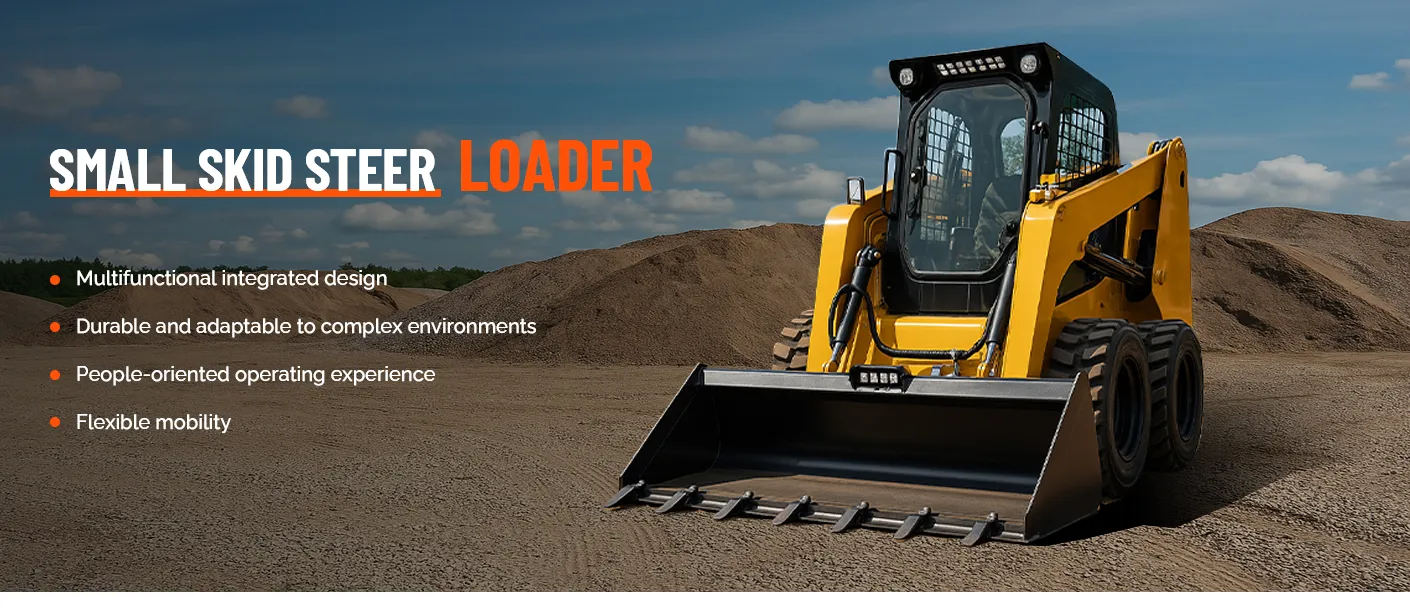
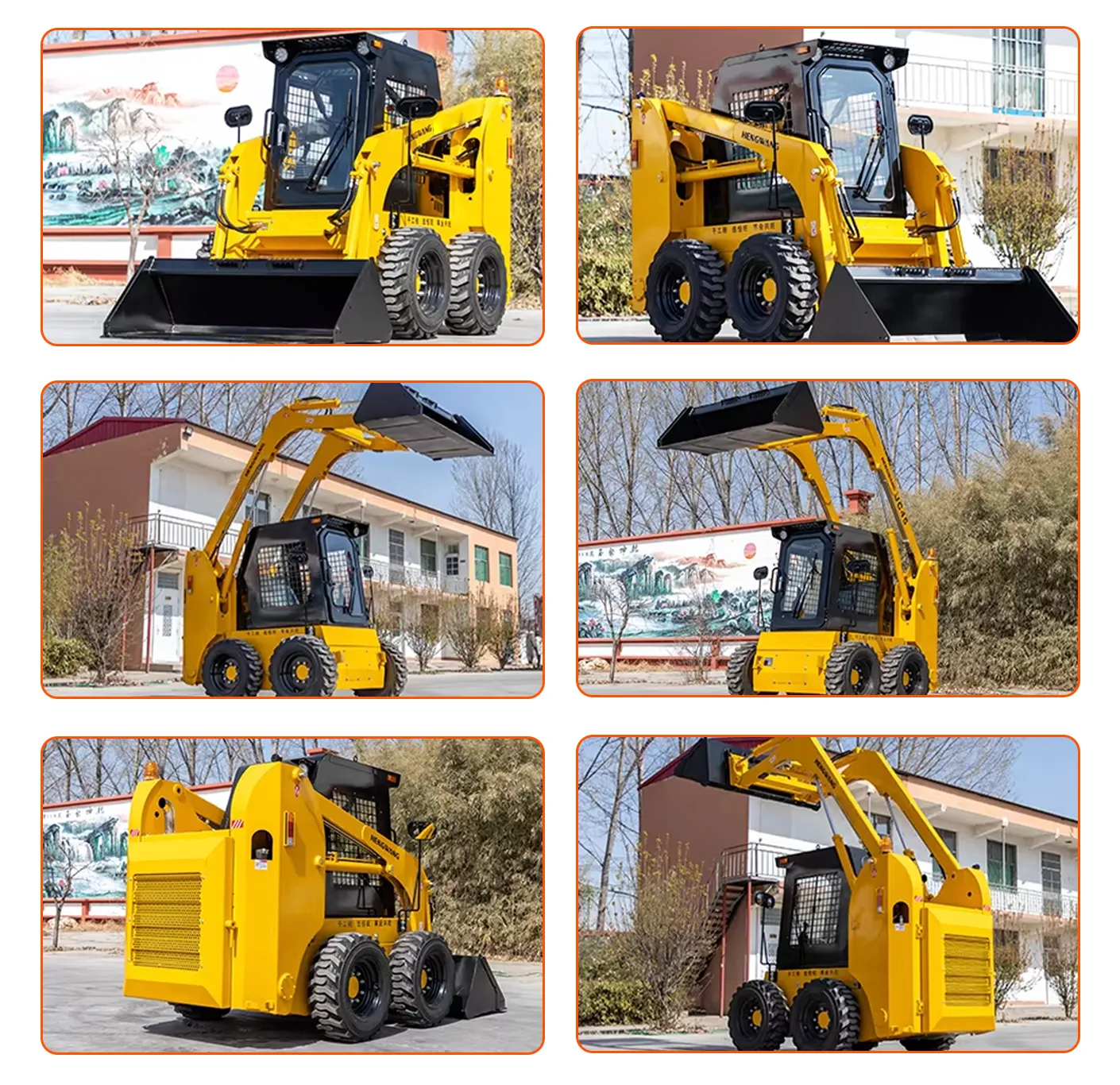
A skid steer is a compact loader that turns by controlling wheel speed on each side. This gives great maneuverability in tight areas. Minicargadoras are common in construction, farms, demolition cleanup, snow removal, and landscaping work.
A skid loader is often another name for a skid steer loader.These machines are popular because they can use many attachment types, such as buckets, forks, augers, sweepers, trenchers, and grapples.
A track loader looks similar in size, but it runs on tracks. It is better for loose soil, rough ground, and wet conditions. If your work is mostly on concrete, a skid steer may be easier and cheaper to maintain. If your work is on mud, slopes, or soft farm ground, a track loader may save time.
Many buyers use these names in different ways. Front loaders, front end loaders, and front-end loader often refer to machines with a front bucket used for loading and carrying. In daily conversation, people may also say end loader when they mean a front-mounted loading machine.
Tractor front loaders are usually mounted on agricultural tractors. They are good for farms, feedlots, light lifting, and daily material movement. A compact utility tractor with a loader can help small farms move hay, soil, tools, and fertilizer without buying a larger machine.
Compact front-end loaders are useful for tight spaces where a full-size wheel loader is too large. But for heavy construction and quarry loading, a dedicated wheel loader gives stronger lift arms, better cycle times, and more stable bucket performance at ground level.
A loader becomes more valuable when it supports the right attachment. The bucket is only the start. With the right attachment, one loader can handle digging, grading, lifting, sweeping, pallet work, snow clearing, land cleaning, and light demolish tasks.
Common attachment choices include:
The key is hydraulic matching. A strong attachment will not work well if hydraulic flow is too low. A heavy tool may reduce lift capacity. That is why we check machine weight, flow rate, coupler type, arm strength, and counterweight before recommending a loader package.
You can also explore Huibang attachments and implements for multi-task equipment when planning a complete fleet solution.
Backhoe loaders are still useful because they combine a front loader bucket and a rear digging arm. One machine can load material and dig trenches. That makes backhoe loaders valuable for road repair, utility work, farm drainage, small construction, and municipal maintenance.
A backhoe is not the fastest loader for loading trucks. It is also not as compact as a skid steer. But when one machine must dig, lift, backfill, and move around a site, a backhoe loader gives strong value. It reduces the need to move two machines to a small project.
If your team often switches between digging and loading, a backhoe may be a smart choice. If your main work is high-volume loading, choose a wheel loader. If your work is tight-space material handling, choose a skid steer or compact loader. The right answer depends on the daily job.
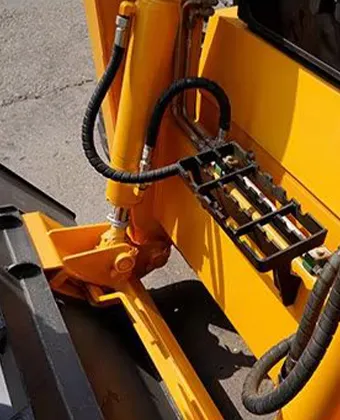
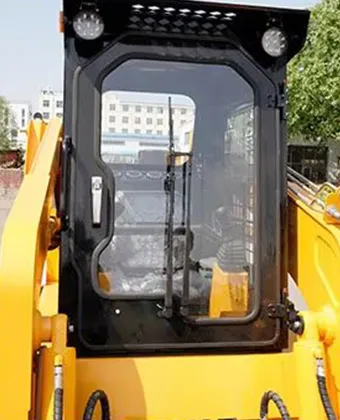
Large wheel loaders are built for high output. They are used in quarries, ports, mines, big road jobs, and heavy production yards. They move more material per cycle and can load large trucks faster. Their power system is stronger, and their frames are built for long working hours.
Compact cargadores are better for smaller spaces. They are easier to transport, easier to store, and easier to operate in narrow areas. A compact machine may not lift as much, but it may finish the job faster when space is limited.
Think of it this way: large wheel loaders win in open, heavy-duty sites. Compact loaders win in yards, farms, landscaping, and tight work zones. A smart fleet may use both. One handles the heavy load. The other handles flexible daily work.
For compact equipment planning, this guide on small skid steer loader and mini skid loader applications may help buyers compare options.
A loader is a long-term business tool. You should not choose only by the first price. Look for a manufacturer that understands construction contractors, farmers, agri dealers, landscaping teams, forestry companies, rental fleets, and public tender buyers.
As a construction equipment manufacturing plant, we focus on four things: strong structure, practical features, stable power, and responsive support. Buyers need machines that are easy to operate, easy to maintain, and strong enough for daily work.
Before placing an order, ask the supplier:
A loader is used to lift, move, load, and carry materials. It can handle soil, stone, debris, pallets, farm goods, snow, and more. With the right attachment, it can also sweep, drill, grab, grade, and clear land.
A wheel loader usually has higher travel speed, better stability, and stronger bulk loading ability. A skid steer is smaller and turns in tight spaces. Choose a wheel loader for open sites and heavier loading. Choose a skid steer for confined areas and mixed tasks.
A compact track loader or track loader is usually better for muddy or soft ground because tracks spread machine weight and improve traction. A wheel loader works better on firm ground, yards, roads, and open loading areas.
Not always. Front end loaders can describe many machines with a front bucket, including tractor-mounted loaders and wheel loaders. A wheel loader is a dedicated machine with wheels, hydraulic arms, and a bucket for loading and material movement.
 Spanish
  English
  Arabic
  Turkish
  Portuguese
  Russian