Avoid your inquiry is delay response, please enter your WhatsApp/Skype along with the message, so we can contact you at the very first time.
We will reply you within 24 hours. If for urgent case, please add WhatsApp/WeChat: +86 16652801818,. Or call +86 16652801818 directly.
*We respect your confidentiality and all information are protected. We will only use your information to respond to your inquiry and will never send unsolicited emails or promotional messages.
Jobsites juggle excavation, trenching, and material handling under tight timelines. Moving multiple machines in and out wastes fuel, slows crews, and adds rental cost. A backhoe loader combines a front loader and a rear backhoe in one powerful machine—dig, load, and backfill without changing equipment.
A backhoe loader is a piece of heavy equipment that combines a front loader (for loading, backfilling, and material handling) with a rear backhoe (for excavation and trenching). This dual setup boosts productivity, reduces mobilization costs, and suits construction sites that need both digging and loading on the same day.
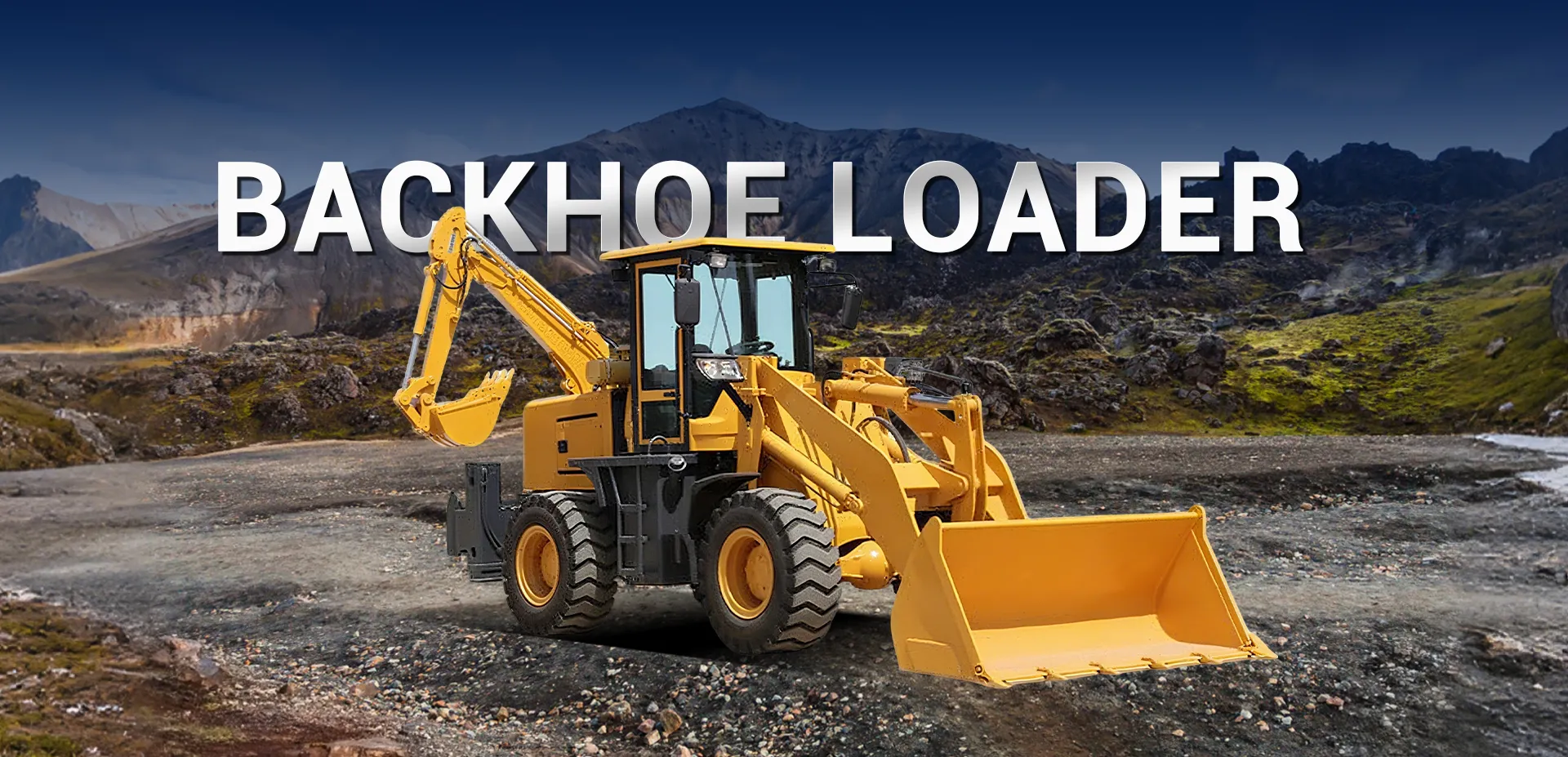
As a construction equipment manufacturing group serving Construction Contractors, Farmers & Agri Dealers, Landscaping & Forestry companies, Machinery Rental Companies, and Government/Public Tenders, we build durable, easy-to-operate, high-capacity machines with strong power systems. This guide explains how a backhoe loader delivers unmatched versatility and real job-site value—so you can spec the right machine and keep your projects on time, on budget, and stress-free.
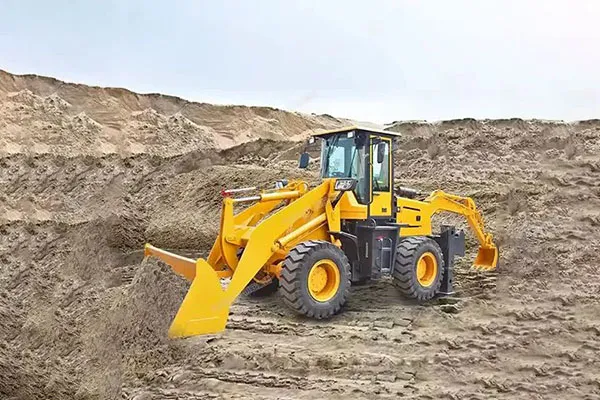
A backhoe loader is a versatile machine that combines a front loader and a rear of the machine backhoe. The front loader bucket handles material handling, loading trucks, backfilling, and cleanup; the rear digging arm (the backhoe) performs excavation, trenching, and utility cuts. In one mobilization, you can dig trenches, move materials, and backfill.
Why it matters: one machine means fewer transport moves, faster task switching, and lower rental or ownership overlap. On a construction site with changing priorities, the backhoe loader is the reliable “Swiss Army knife” of construction equipment.
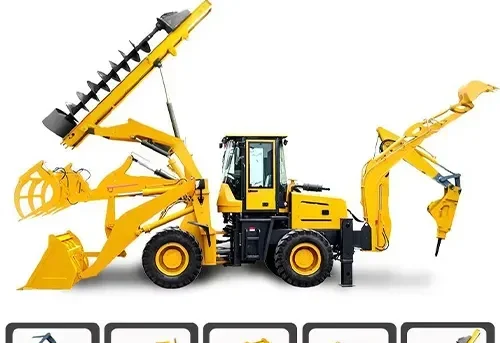
The front loader bucket and rear backhoe arm let the operator switch tasks in minutes. That makes digging and loading a single continuous workflow—no waiting for a second machine or crew.
Modern hydraulic systems deliver smooth metering, strong breakout force, and precise feathering. Intuitive joystick controls shorten the learning curve and improve cycle times, especially in tight spaces and near utilities.
A backhoe loader faces prying loads at the rear and torsional forces up front. A heavy-duty frame, reinforced loader arms, and a robust hydraulic system keep the machine rigid and responsive under heavy loads.
A good hydraulic setup optimizes three things:
Pro tip: Ask about auxiliary lines for attachment power, flow/pressure specs, and how the machine maintains responsiveness at low engine speeds to save fuel while keeping productivity high.
Backhoe loader advantages:
Excavator advantages:
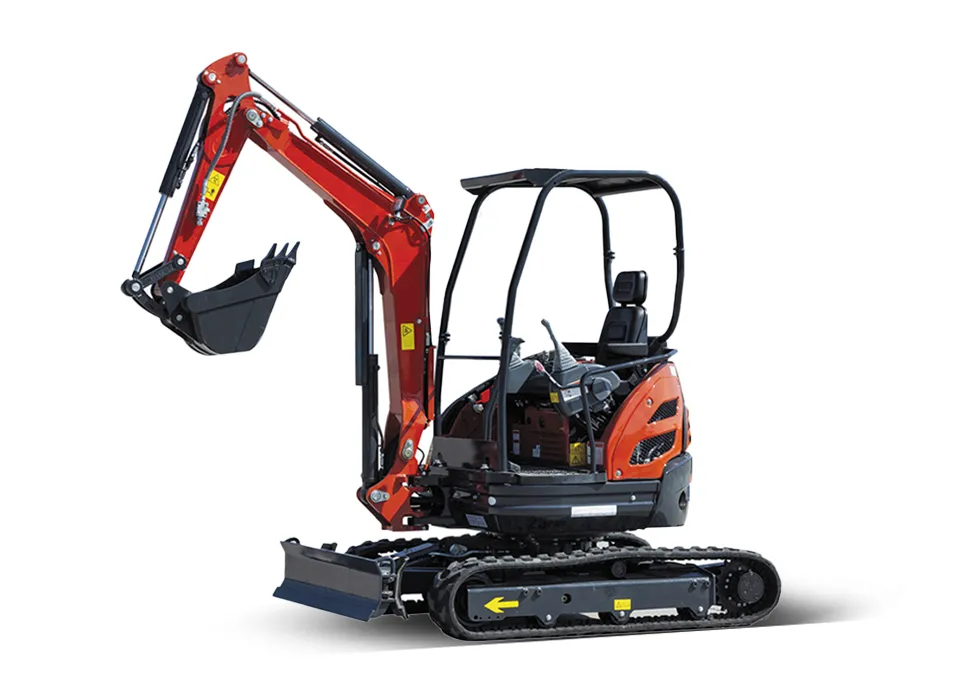
Rule of thumb: If your day splits between digging and loading in varied spots, a backhoe loader wins on versatility. If 80% of work is pure digging or lifting with frequent swing cycles, choose an excavator (or mini excavator for tight spaces).
| Task / Need | Backhoe Loader | Excavator | Compact Wheel Loader |
|---|---|---|---|
| Mixed digging and loading | Excellent (one machine) | Limited (needs separate loader) | Not for digging |
| Trenching all day | Good | Best | Not designed for it |
| Material yard cycles | Good | Limited | Best |
| Mobilization between small jobs | Best | Good | Good |
| Attachment breadth (mixed tasks) | Excellent | Excellent (dig side) | Excellent (loader side) |
Why choose us as your backhoe loader manufacturer?
1) Built for durability & reliability
2) Easy to use—faster operator onboarding
3) Load capacity that matches your work
4) Strong power systems
5) Lifetime support
Call to action: Tell us your three toughest daily tasks. We’ll recommend a backhoe loader configuration—bucket sizes, attachment package, and hydraulic options—tailored to your site and budget.
What dig depth should I choose?
Match the dig depth to your most common trench spec plus a buffer. For utilities, allow extra for bedding and inspections. If most trenches are shallow, don’t oversize—smaller models improve maneuverability in tight spaces.
Do I need an enclosed cab?
If you work in cold, dusty, or noisy environments, an enclosed cab boosts operator comfort and productivity. For mild climates and short shifts, open ROPS can suffice—just ensure PPE and safe practices.
Which attachments are most valuable first?
Start with a multipurpose loader bucket and a trenching bucket. Add forks for pallet handling and a hydraulic thumb for demolition or debris. Upgrade to an auger or breaker based on your most frequent add-on tasks.
How do I compare models across brands?
Line up operating weight, hydraulic flow/pressure, bucket sizes, dig depth, and cab features. Evaluate support—parts availability and training matter as much as specs.
What training is needed for operators?
Even experienced operators benefit from model-specific orientation: control mapping, hydraulic feel, stabilizer use, and safe trench practices. A two-hour walk-through can raise efficiency by double-digit percentages.

 English
  Arabic
  Turkish
  Spanish
  Portuguese
  Russian