Avoid your inquiry is delay response, please enter your WhatsApp/Skype along with the message, so we can contact you at the very first time.
We will reply you within 24 hours. If for urgent case, please add WhatsApp/WeChat: +86 16652801818,. Or call +86 16652801818 directly.
*We respect your confidentiality and all information are protected. We will only use your information to respond to your inquiry and will never send unsolicited emails or promotional messages.
Working on a crowded job site with the wrong excavator slows crews, inflates costs, and frustrates owners. Imagine finishing trenches twice as fast, even in tight spaces—that’s the problem solved by a smart compact excavator choice.
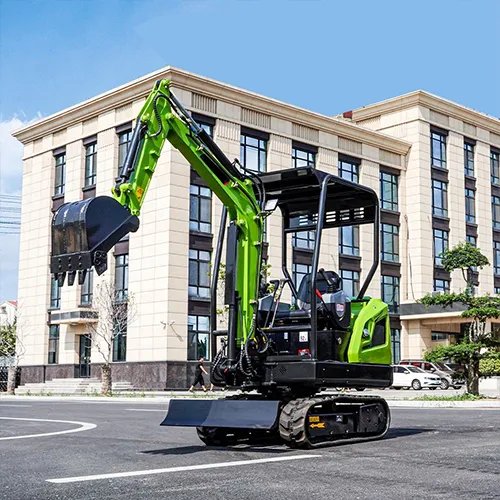
A compact excavator—often called a mini excavator—delivers powerful digging depth, easy maneuverability, and versatile attachments in a compact design, making it the best value for contractors, landscapers, farmers, and homeowners tackling demanding tasks.
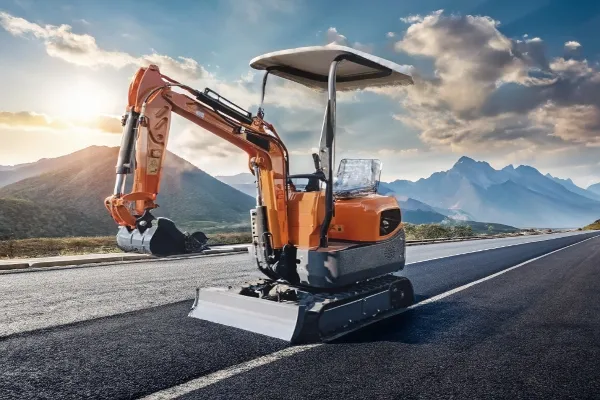
A compact excavator (or mini excavator) weighs between 1 and 10 tons—small enough to travel on a trailer yet heavy enough for serious work. Operating weights ranging from 2,000 lb to 20,000 lb give crews flexibility: lighter models slip through garden gates; larger units like the VIO55‑6A tackle medium‑scale foundations.
The HB-10 mini excavator features a compact footprint (2174×850×1590 mm) and optimized tracks for excellent maneuverability in tight spaces. Its hydraulic motor-driven system and 1414 mm turning radius ensure precise movement and agility. The low-profile design minimizes overhead risks, while the open hydraulic system simplifies maintenance. With ground clearance suited for uneven terrain, it offers stability and flexibility, making it ideal for trenching, landscaping, and operations in confined areas such as urban construction sites and narrow agricultural fields.
Powered by a 7.6 kW single-cylinder diesel engine, the HB-10 offers a maximum digging depth of 1825 mm and an excavation height of 2444.5 mm. Its 2922 mm reach and 795 mm stick length enhance versatility for ditch digging and material handling. The 0.03 m³ bucket balances efficiency and precision, while the gear pump-driven hydraulic system ensures smooth attachment operations, making it ideal for agriculture, construction, and utility installation.
Designed for durability, the HB-10 incorporates a cast-iron counterweight and reinforced undercarriage to withstand harsh working conditions. The gear pump and open hydraulic system reduce mechanical complexity, minimizing downtime and repair costs. With an operating weight of 850 kg, it maintains a sturdy yet lightweight profile, enhancing tr
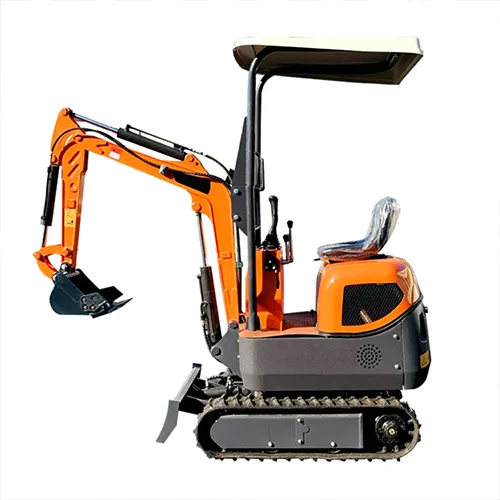
Digging depth requirements dictate machine class. For burying farm irrigation lines, a digging depth of 7 ft is enough; urban utility installs demand >10 ft. Meanwhile, operating weights must align with haulage limits. Farmers often choose a 5‑ton mini excavator (easier to transport on a gooseneck trailer), while construction contractors lean toward 8‑ton units for heavier Loaders.
Formula: Required depth (ft) × 0.7 ≈ minimum boom length (ft) for efficient cycles.
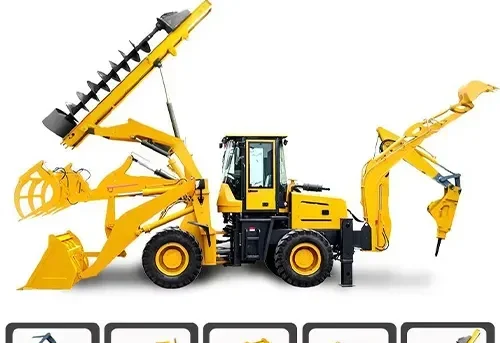
The right attachments convert a single machine into a jobsite Swiss‑Army knife:
Mini excavator attachments lock with ISO‑certified pins for safe operation. Always verify hydraulic flow before ordering an auger or mulcher.
Safety starts with daily checks:
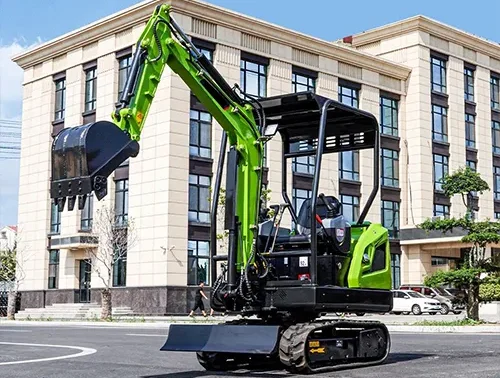
Modern machines feature ROPS & FOPS cabs, seat‑belt indicators, and 360° cameras. Operator comfort reduces fatigue and accidents, boosting crew morale.
Are compact excavators easy to operate for first‑time users?
: Yes. The cab layout is ergonomic, controls are intuitive, and we provide video tutorials plus on‑site training.
Which attachments are most common for landscaping?
: Auger, grading bucket, hydraulic thumb, and brush cutter top the list for construction and landscaping crews.
Is zero tail swing necessary for every job site?
: Not always. It’s perfect for restricted areas; conventional tails suit open fields where extra stability matters.
Can I finance or lease a compact excavator?
: Absolutely—Huibang partners with global banks to offer flexible leasing from 12 to 60 months.
What maintenance schedule should I follow?
: Grease daily, change engine oil every 250 hours, hydraulic oil every 2,000 hours, and inspect undercarriage weekly.

 English
  Arabic
  Turkish
  Spanish
  Portuguese
  Russian